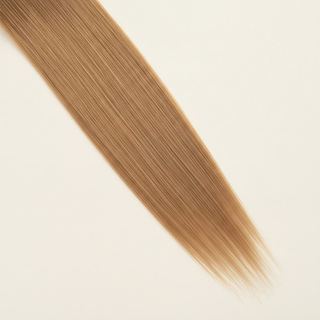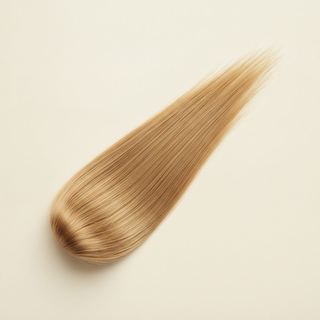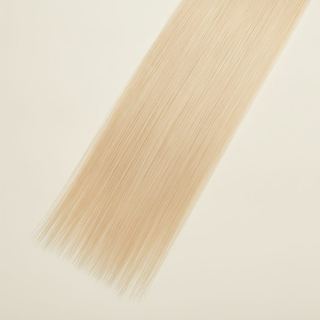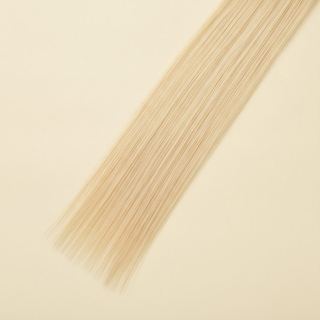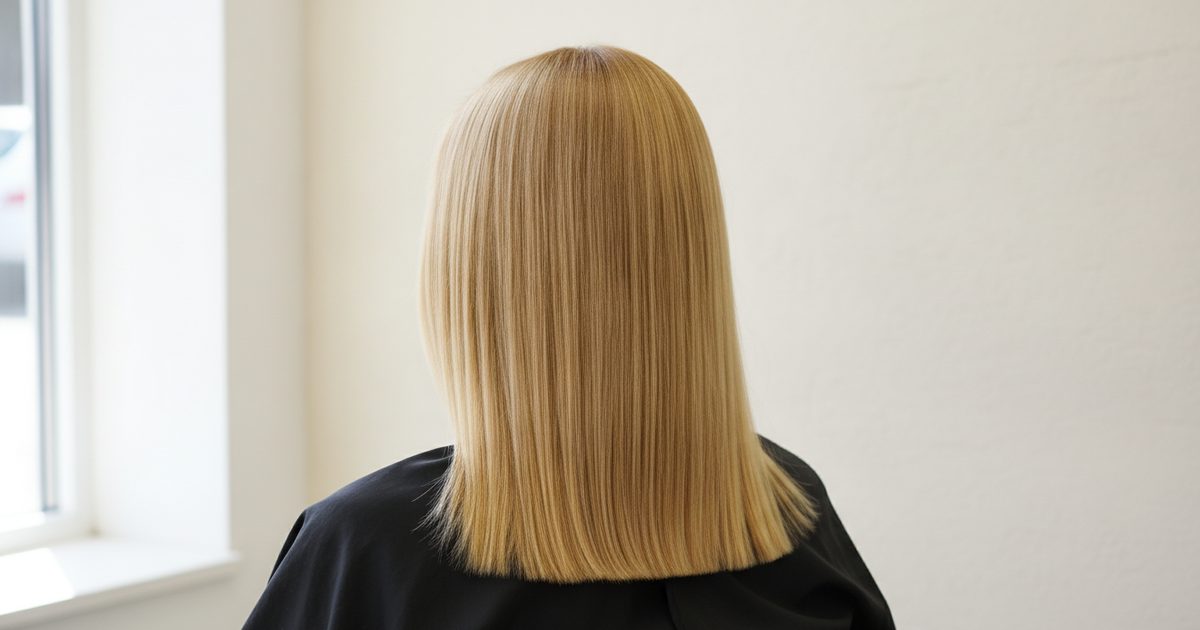
Under the bleach an 8 looks nearly white. That is the paste, which carries blue or violet pigment of its own and lies about the lift underneath it, and the classic new-hand mistake is rinsing at that white and finding the hair yellow at the basin. Yellow is the pigment at 8. It is what a light blonde stands on, and a toner turns it into the blonde that was planned, so the muddy, gray and lilac results people photograph at this level nearly all come from the step after the rinse, or from reading the level wrong before it.
Confirm the level before the toner
Towel it and take it to daylight. Wet hair reads a level darker and the bulb over the basin reads warm, so a true 8 wet under that lamp can look like a 7, and a 7 dried under it can pass for an 8. Dry a section from the mid-back on cool air, lay it on white paper against the level chart swatches, and judge lightness only.
Then be honest about the warmth. The chart says 8 is yellow, and on paper the orange is gone by now. On a head that was a 4 or a 5 this morning, a stalled 8 very often still carries orange at the root, and several brand charts put yellow-orange at 8 for that reason. The scraped strand is the truth, and yellow-orange is not yellow. If the root shows orange in it, an 8 toner will leave it there, and that root wants blue as well as violet or another round of lift. Ends that have gone past yellow to a pale, near-cream yellow are a 9, and a head can hold both numbers at once.
8.1, 8.13, 8.2 and 8N
Violet cancels yellow, straight across the wheel, and the yellow at 8 usually still has a trace of orange behind it, so the working neutralizer is violet with a little blue. The shades at 8, US letters beside the decimals:
8.2 (8V), violet, the direct opposite of the pigment. Straight on a fresh 8 it cancels the yellow, then keeps going on porous ends and shows as itself.
8.1 (8A), ash, blue-based. Handles the orange trace and cools the yellow, and alone it can drift green-gray, so 8.1 with a quarter of 8.2 is the usual ash at 8.
8.13, beige, ash with gold. Takes the edge off the yellow and leaves soft sand, the most forgiving of the five and the one that keeps some shine, because cool pigment does not reflect light and a blonde with no gold left in it reads dull.
8N, natural. Softens the yellow to a warm light blonde and covers gray. Whether it also tones depends on the line, since some demi N shades carry a soft violet-blue.
8.3 (8G), gold. Yellow on yellow, honey, hides uneven lift.
Two rules sit over all five. The toner is picked at the level the hair reached or darker, since a toner deposits and cannot lift, and a 10 toner on an 8 does nothing (a T18, the one everyone knows, is a pale-yellow level-10 product and its own chart keeps it off yellow hair). And cool reads darker: an 8A dries a shade deeper than an 8N on the same hair, which is fine as long as it was expected. The toner selector narrows the family from the warmth and porosity you found.
The developer under the toner
Ten volume, or lower. A toner is deposit only, and 10 vol sets the pigment without opening the cuticle much. Most professional lines now sell a dedicated toning developer at 5 to 9 vol, called processing solution or activator, and that is the better bottle for a demi on freshly bleached hair. Mix by weight at the tube’s ratio, liquid toners 1:2, and the developer mix calculator turns the ratio into grams. It goes on towel-dried hair, whole head fast, roots first and ends last, because the ends have been lifted more times and drink the pigment. A liquid toner usually wants 15 to 20 minutes and a demi cream 10 to 20, and the clock matters less than the strand: wipe one every five minutes and rinse when the yellow is gone, which on porous ends can be well before the timer. Toner looks purple or gray on the head while it works and rinses lighter than it looked.
If it was really a 7, or really a 9
Suppose the root was a 7 after all. The violet in an 8 toner cancels the yellow half of yellow-orange and leaves the orange half, and the two mix into khaki at the root with gray on the paler ends. Either lift again after a day or two, or tone with a 7.12 and take the cool medium blonde level 7 can carry.
Now suppose it was a 9. An 8 toner on pale yellow deposits more than there is yellow to cancel, so the surplus violet shows as lilac and the head lands a level darker than planned, and the blue in an 8.1 does the same in green-gray. Next time, a 9.2 or a 9.21.
Both wash back with a clarifying shampoo or two.
| What you see after the bleach | Real level | Toner that works | Toner that fails |
|---|---|---|---|
| Orange, gold at the ends | 6 | 6.1, a cool dark blonde | Any 8: violet does nothing to orange; muddy |
| Yellow-orange, brassy gold | 7 | 7.12, or 7.1 with a touch of 7.2 | 8.2 or 8.13: khaki at the root, gray at the ends |
| Clear yellow | 8 | 8.1 with 8.2, 8.13, 8N or 8.3 | 10.21 or silver: will not hold on hair this dark |
| Pale yellow, the warmth almost gone | 9 | 9.2, 9.21 or 9.13 | 8.2: lilac, a level darker than planned |
| Palest yellow, near cream | 10 | 10.21 or 10.2 | 8.1: the blue turns pale yellow green-gray |
Reaching 8, and gray at 8
As a natural color 8 is rarer than 7 and mostly a childhood color, and it grays quietly, the white blending in until the head reads paler.
Reaching 8 from below: two levels, from a 6, is 20 vol permanent, 30 on coarse or resistant hair. Three, from a 5, is 30 vol permanent or a high-lift on 40 vol, virgin hair only. Four, from a 4, is high-lift on virgin hair or else bleach, and from a 3 or below it is bleach. Permanent color moves natural pigment only, so previously colored hair goes to a remover or bleach. Coming down from a 9 or 10 is deposit, a demi or 20 vol permanent, in a warm shade like 8N or 8.3, because hair bleached to 10 has lost the yellow an 8 stands on.
Gray at 8 is where coverage begins to fail. Coverage is reliable up to about 8 and not past it, since too little pigment sits opaque on white, so an 8N at full natural share on 20 vol for 45 minutes reads soft and see-through. Over 50 percent white, cover at 7N and gloss up to 8, or let the white stand in as highlights and call it a blend, which grows out softer anyway. Most lifted 8s leave with a shadow root regardless, a 6N or 7N demi an inch down blurred into the 8, and on a gray head that root does some of the covering the 8 cannot.