Where the clock lives
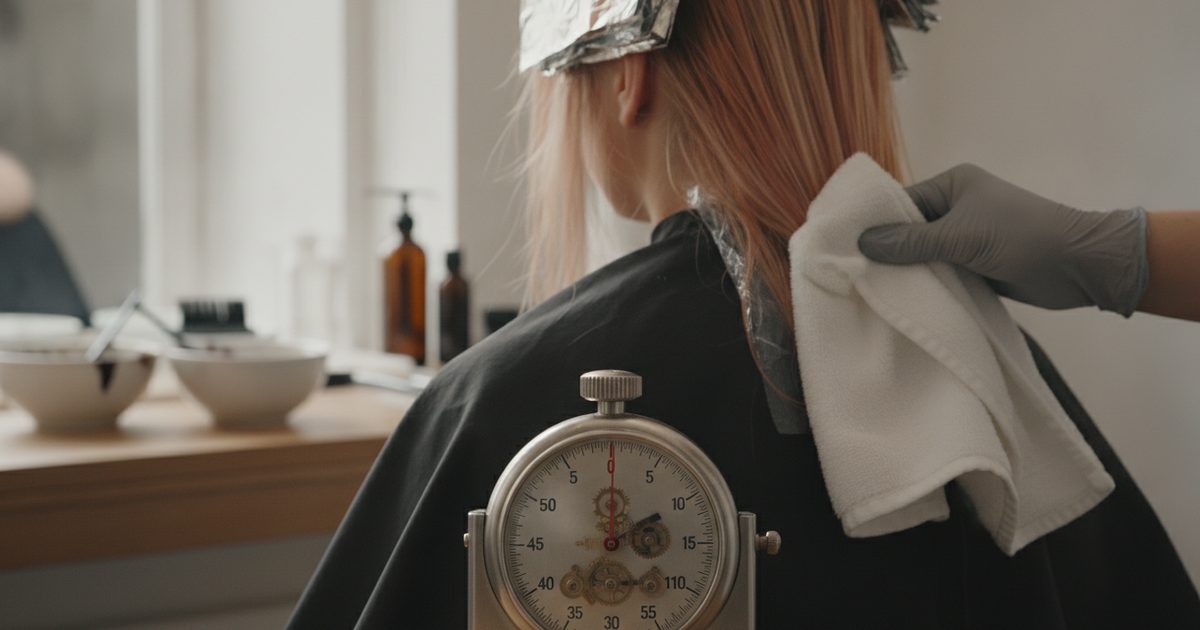
Ask a room of colorists when the timer starts and you will hear two answers. On permanent, demi and semi most set a single timer once the last section is on, because that is the end the leaflet counts from, then go straight back to the first section they painted and look at it, since it has been processing since the brush touched it. On lightener and toner the clock starts with the first section and every section is read by eye. Either way they keep looking until the hair says it is done. A few run a timer per section on a slow application. Nobody times a whole head from the first brush and rinses at the bell.
Get it on fast
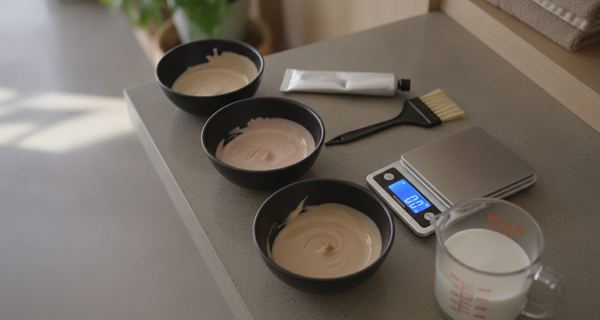
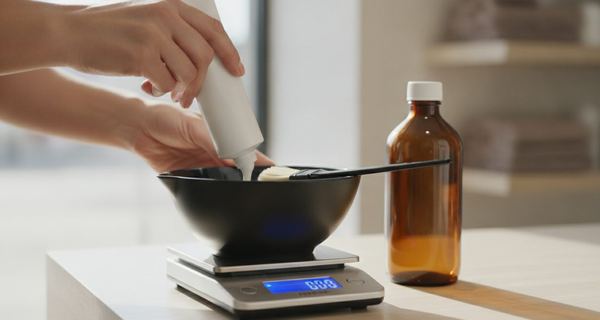
Everything about timing gets easier if the whole head goes on quickly, because then it processes together and one look tells you about all of it. Section before you mix, take thin partings, and put product on the top and the bottom of every section. If the application is going to run long, get a second pair of hands, or do half the head, rinse it, and do the other half. And mix small. Color and lightener start developing in the bowl the moment the developer goes in, touching hair or not, so a big bowl mixed at the start is weaker by the time it reaches the last section. Fresh small bowls as you go, and nothing saved for later.
The other reason to be quick is overlap. Product that lands on hair lightened last time is bleach over bleach, and that is where hair snaps. Leave previously lightened ends out and give them a few minutes at the end, or nothing at all.
The scalp is warm
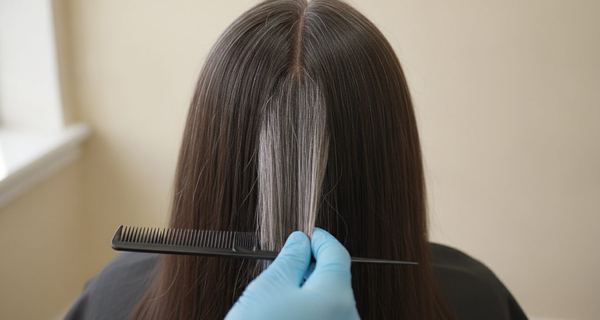
Bleach on the scalp processes faster than bleach an inch down the strand, so on a full lift the lengths go on first and the roots last, and a root retouch is quick. Going darker or covering gray runs the other way: the new growth has the tightest cuticle and takes the longest, so it goes on first, and the porous ends, which grab everything, get the last five to fifteen minutes. On a lift most colorists start at the back, where the hair is darkest and densest. On coverage they start wherever the gray is heaviest.
Read the tub
Every line prints its own maximum and they differ more than people expect: one box says 20 minutes, another 30, a professional permanent 45 for gray. That printed number is the ceiling, and most heads need less. Permanent color makes its pigment and then stops, somewhere around 30 to 45 minutes, and after that the hair is only swollen, alkaline and losing moisture. Bleach peaks too, the first 30 minutes doing most of the lifting, but it does not stop on its own. It keeps going while it is moist, and thirty minutes more only buys damage, which is why some colorists would rather do two rounds of thirty with a rest between than one hour, and never with 40 volume.
Texture and porosity move the number a little either way. Fine hair and porous ends are quicker, coarse hair and a shut cuticle slower, and the difference shows on the wiped strand before it shows on the clock. The porosity test is the quickest way to know which you have. Lift is a different matter, decided by the strength of the developer and hardly at all by the minutes: 20 volume gets 1 to 2 levels, 30 gets 2 to 3, 40 gets 3 to 4 in a high-lift series, and leaving any of them on all afternoon adds dryness and no level. The level finder shows how far each one can take you.
| Product | What leaflets say | When to look |
|---|---|---|
| Permanent color | 30 to 45 by line, 45 for gray | First look at 20 minutes, 35 on heavy gray |
| Demi-permanent | About 20, up to 30 on some lines | Halfway, then every 5 |
| Toner, demi cream | 5 to 20 | At 5, or 3 on pale porous hair, and purple means rinse |
| Toner, liquid or gel | 10 to 20 | At 10, or 5 on porous hair, and purple means rinse |
| Bleach on the scalp | 15 to 45 on 20 vol, by eye | From 10 minutes, then every 5 |
| Bleach off the scalp, foils | 45 to 60 on 20 and 30 vol; by eye on 40 | First foil at 25, then every 10 |
| Balayage in foils | 30 to 45 on 20 and 30 vol | First foil at 10, then every 10 |
| Semi-permanent or direct dye | 20 to 30, no developer | When the tone is there |
| Bonder step 2 after the rinse | 10 min | Then shampoo |
The ceiling this page shows is a typical one, and the one that counts is printed on your leaflet. The FDA puts it the same way in its consumer guidance on hair dyes: follow the directions in the package, and do not leave the color on longer than they say.
While it sits
Dry bleach is dead bleach. Once the mixture dries to a powder it has stopped lifting, and the hairline, the parting and the edges of foils dry first, so go back and re-wet them. A bag, a cap or foils over the borders hold the scalp warmth in and keep the product moist and moving, which speeds and evens the lift. Too warm and it bakes to powder instead, so a little water sprayed inside the cap helps, and most lift it every 10 minutes to check. On fragile or already lightened hair leave the foils open so the heat can get out. A cover on permanent color takes a chunk off the time the same way. Keep it off fine hair, lightened lengths and demi, which over-deposits without any help.
While you wait, cross-check in the opposite direction from the way you applied and you will find the hair you missed. And tug a strand at every check. If it stretches like gum, rinse now, timer or no timer.
Scrape a strand and read the level
A check means taking the product off. Use two fingers, or the end of a tail comb, to pull the mixture off one strand and read what is underneath. Read the level and let the tone wait for the toner: yellow at the stage you wanted is done while orange is not there yet, and a full lightening rinses inside the pale yellow. Rinse five minutes short and the stripe it leaves is a band. On toner the worry runs the other way: the moment a wiped strand reads purple or gray it is over, and the ends usually get there before the roots.
At the basin
Rinse lightener until the water runs clear, shampoo, and skip the conditioner if a toner is coming. A bond builder step 2 goes on for 10 minutes after the rinse and no longer. Toner goes onto damp, towel-dried hair as fast as you can get it on, roots first on most heads so they do not come out blotchy, and it is watched from 3 minutes on pale hair.
One last thing, about the room. Hot opens the cuticle and cold closes it, so a client who steps outside in January with color on is changing the number while it runs. Moving rooms moves the temperature with it, so staying put until the rinse is worth the fuss on a long application.