Gray is a different hair
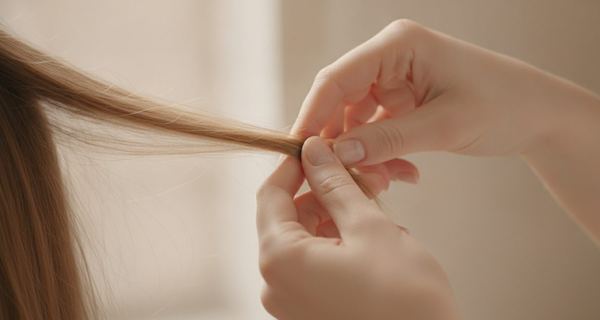
The strand has no pigment left in it. It goes clear, a white canvas, and whatever you deposit is all anyone will see, so a sheer shade that looks rich over a level 6 base is tinted glass over white. The hair has changed too: gray comes in coarser, often wiry, sometimes corkscrewed like a whisker, with a cuticle that lies tighter than the hair around it, and it is stubborn about letting anything in, henna included. That is why coverage is its own service, and why the first question is which service.
Cover it or blend it
Decide that before the bowl comes out. Solid permanent coverage gives opaque color and a line of demarcation in two to three weeks, which means a root touch-up every month for as long as she wants it. Blending is the other road: a demi on 10 volume, thin foils or lowlights, or deliberately partial coverage. It takes the edge off rather than making the gray disappear, and it grows out soft, so those clients come every 6 to 10 weeks with no line. Some colorists on a heavy-gray head cover only half of it on purpose, so what washes out becomes the highlight. If she would rather see a little gray than a warm root every three weeks, blend.
How much, and where
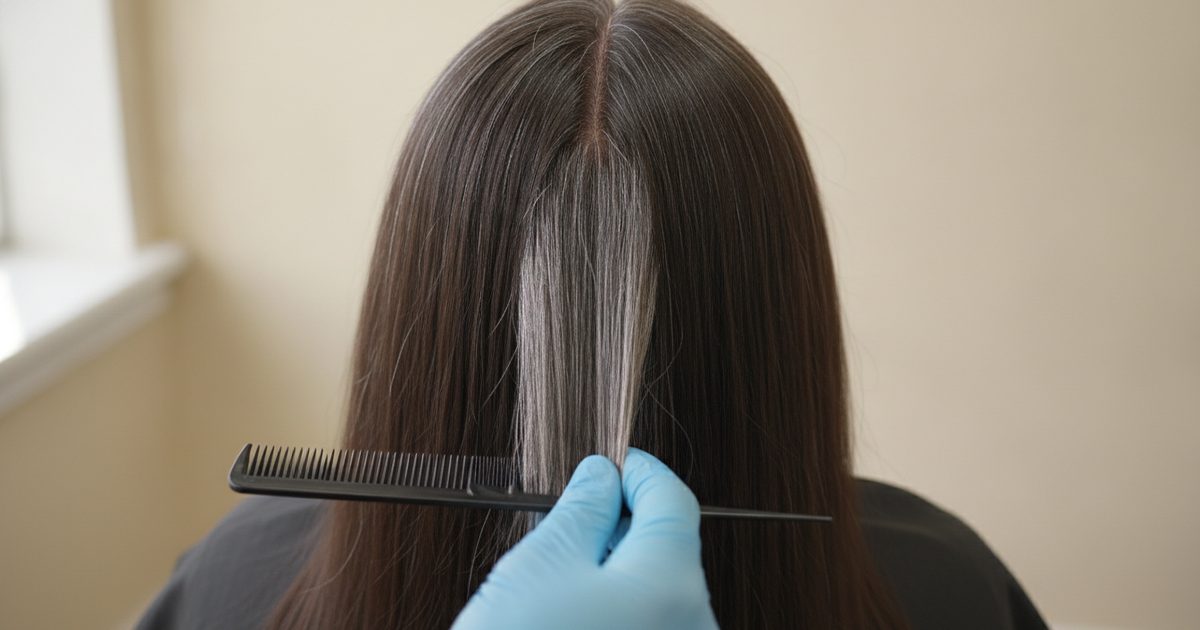
Estimate by eye on clean dry hair, and by area. The front, the hairline, the part line and the crown are almost always grayer than the back, and the front is what she sees in the mirror, so that is the number that matters most. Root spray comes out at the basin first. Then the natural share follows the percentage. If the target shade is itself a natural, the share question disappears: the whole bowl is N.
| Gray in the area | Natural series share | In a 60 g formula |
|---|---|---|
| 1 to 25 percent | 1/4 N | 15 g N + 45 g target shade |
| 26 to 50 percent | 1/2 N | 30 g N + 30 g target shade |
| 51 to 75 percent | 3/4 N | 45 g N + 15 g target shade |
| 76 to 100 percent | 100 percent N; NN from 50 percent on resistant white | 60 g N, gloss for tone after |
Treat those shares as a safe starting point rather than a law. Wella's own education runs lighter: no natural under 30 percent, a third at 30 to 50 and half above. On stubborn white the grayer the head the more natural in the bowl, and the calculator swaps the natural for its NN, double-neutral version from 50 percent up, which is what those shades exist for. Mix the N at the level she is going to, so a 5 going to a 6 gets 6N.
What goes in the bowl
Something natural, always. The pure naturals carry all three primaries in balance and do the opaque work, and a fashion shade or an ash on its own over white gives shine with nothing behind it, a khaki cast that reads as uncovered gray. Coverage is built from warmth, because on a white canvas you are building a brown from scratch, which is why ash-only formulas go dull or green on white. Keep the cool share modest and let the N carry the depth.
20 volume does the covering. It opens the hair enough for permanent dye to get in and it lifts a level if the target sits a level above the base, which is nearly every gray client. 10 volume and demi blend and deposit. 30 volume only when the target is two full levels up, and the trade is sheerer white, because the peroxide spends itself lifting. Three levels or more is a different service: lighten first and cover on 20 volume next visit, or pick a target within two levels on the chart of levels 1 to 10. Three or more levels darker onto a lot of white is the opposite problem, flat and sometimes faintly green with no warm pigment underneath to hold the depth, so add gold or copper or pre-fill.
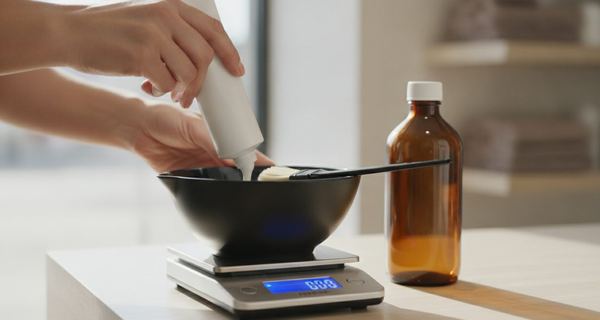
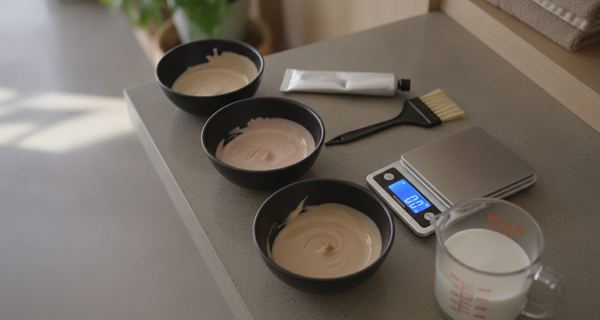
Mix at your line's ratio by weight, in anything but a metal bowl, use it now, and put the lid back on the developer.
Before the brush
Barrier cream is the other thing to settle first. It keeps stain off the skin and it blocks color wherever it touches hair, so keep it well back from the hairline and the baby hairs or that is exactly where the gray will show. On stubborn white some colorists use none at all.
Putting it on
- Start where the gray is heaviest, the front and the hairline on most heads and sometimes the crown. The most stubborn hair needs the longest contact, and the front is what she sees.
- Thin sections, half an inch or less, at the regrowth, and saturate every strand top and bottom. Small sections need less product on the brush and miss less hair.
- Roots only. The lengths covered last time get a gloss, never the permanent again.
- Give it the full time. 35 minutes is the working standard once there is real gray in the mix, 45 for anything stubborn or past 50 percent, which is ten more than the standard time, and the check before rinsing is on the whitest section. The processing time calculator adjusts for product, gray and heat, and moves the first check earlier for fine or porous hair.
- Look before you rinse. Push the cream back off a section at the front with the tail comb, or wipe a strand there. Warm or translucent still? Ten more minutes, then look again.
Tones that lie on white
Reds, coppers and violets are rich on pigmented hair and see-through on white. Past 50 percent gray they need a natural at the same level in the bowl, often half a level darker than the target, so the depth reads before the tone does. Once the white is covered, a demi gloss on 10 volume can push the whole head any direction she likes, and that is the working rule: natural covers, fashion tones.
Two visits from now
Solid coverage shows its line in two to three weeks, so the next appointment goes in the book before the regrowth passes half an inch, because fresh white next to covered white is where it looks patchy. Permanent on the roots, a gloss through the ends. Too dark can also draw the face down as the years go on, and a client who wore a 4 for years often looks better a shade lighter now. More than two levels lighter is two visits, and a little gray left showing is not a failure if she chose it.