Toner, a demi gloss, a permanent shade going darker, a gray blend. Every job that calls for 10 volume is a deposit job. The bottle is 3 percent hydrogen peroxide, enough to activate the color in the tube and open the cuticle far enough for pigment to get in, and too little to do much to the melanin already there. On natural hair it moves nothing, or half a level on fine hair left the full time. 20 volume lifts one to two levels in the same 35 minutes, and the level chart shows what one level looks like.
Ten is the lowest bottle most lines carry, and the shelf does go lower. Several lines sell a 5 volume, sometimes labeled toning developer, and a few sell a zero. Brands that print percent put 1.5% on the 5 and 3% on the 10. If the directions on the back name one of those, use it. If they say 10, or say nothing, 10 is the answer.
Where it lets people down: gray
The one place 10 vol goes wrong is gray, and it goes wrong slowly. White hair is resistant, wiry, the cuticle lies tight, and 3 percent does not open it far enough to push pigment in and hold it. A 6N on 10 vol over a head that is a quarter white looks fine at the basin the day it is done, then slides off over the next two or three washes, and the client comes back saying it never took. What 10 does to gray is blend it, a softer salt-and-pepper effect where the white takes a tint rather than the shade on the tube, and that suits some people. Anyone who wants the gray gone is a 20 vol permanent job, and more natural (N) shade in the mix does more for coverage than any bottle. Going darker on 10 is right, unless there is gray in it.
Toner: 10 vol, damp hair, short time
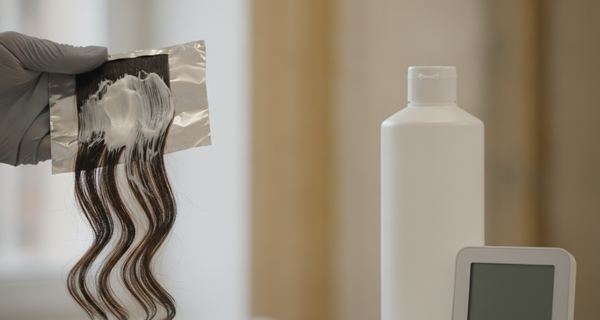
Lift is the one thing a toner does not want. Toner goes onto hair that lightener has already opened, so it grabs, and every bit of extra lift pulls up more of the yellow the toner is there to cancel. The routine most colorists teach is towel-dried hair, 10 volume, up to 15 or 20 minutes, checking every five, and the processing time calculator starts a toner at 10 minutes and tells you to look early. Put 20 vol under the same toner and the cuticle opens wider than the hair wants. The violet lands harder and less evenly, the peroxide keeps lifting the yellow underneath, and a fresh level 9 ends up pale gray at the ends and still yellow at the root in the same twenty minutes.
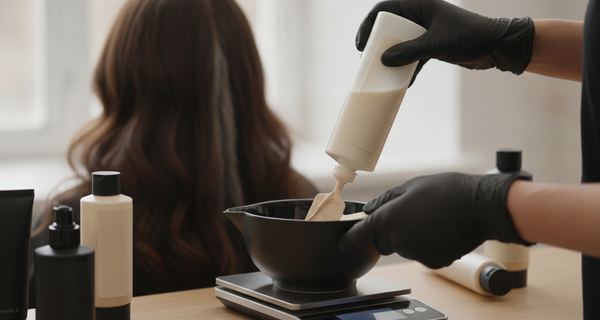
Mix it at the ratio on the back. Most toners are 1:2, so 40 g of toner gets 80 g of developer, or an ounce of toner to two ounces from the bottle if you measure by the cup, and the developer mix calculator turns either into the other. Clear developer, the runny one, is what a bottle-applied toner wants. Cream is what a brush wants. Same 3 percent in both.
Going darker, and a demi for the ends
Going darker is deposit. A 7 that wants to be a 5, or a faded blonde who wants her dark blonde back, gets a demi or a permanent on 10 vol, and the result is the shade printed on the tube, because nothing warm was pulled up underneath it. The same shade on 20 comes out a touch lighter and warmer than the swatch.
Faded ends on a root retouch get a demi gloss on 10 vol for the last ten to fifteen minutes of the root time, and the permanent stays on the regrowth. Permanent laid over permanent builds up on the lengths. Each retouch leaves the ends a shade darker and duller than the roots, and that build-up is hard to lift back out later. A demi in the same tone family refreshes the lengths, matches the root and fades out gradually instead of stacking.
Fragile hair: one bottle down, a few minutes up
Previously lightened, high-porosity, fine or chemically straightened hair has less to lose. A permanent shade mixed on 10 vol in place of 20 gives up a level of possible lift and in return keeps the cuticle calmer and the color more even from root to end, and five more minutes on the clock lets the color finish. I mix it that way on hair that has been colored before, permanent on 20 for regrowth that needs lift or coverage and a demi on 10 for the lengths, and the two come out closer in tone than one bowl over the whole head ever gets them.
Bleach on 10: low and slow
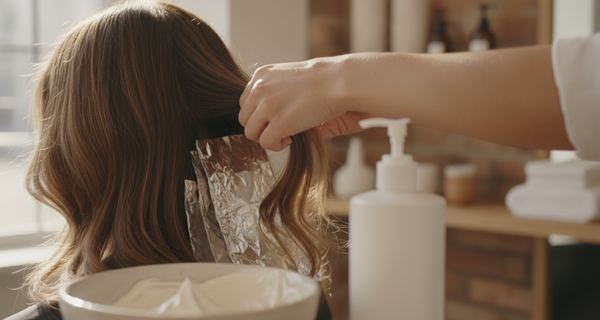
Ten under lightener is the slow end of bleaching, and it is a real method. With bleach the developer sets the speed and the lift is in the powder, so a 10 vol mix reaches the same pale yellow a 20 does and takes longer to get there. Colorists who work this way use it on the scalp and on hair that is already compromised, sometimes thinned to one part powder and three or four parts developer, because slower gives them more time to watch and less heat on the skin. One colorist who ran 10, 20, 30 and 40 side by side on the same hair inside the manufacturer’s 50 minutes got four different results, and the 10 still took a level 3 to a level 7. One well-known colorist disagrees and bleaches on nothing below 20, because, as he puts it, 10 has no lift in it, and the longer the hair sits in an alkaline mix the more the slow route costs it. Ten with lightener is slow, it has to be watched to the end of the brand’s time, it needs saturating like any other bleach, and it works.
I keep lightener on 20 for the scalp and 30 in foils, and go to 10 under it on ends that are already porous and need one more shade.
| Job | On 10 vol | On 20 vol |
|---|---|---|
| Toner on a lifted 9 | Pearl blonde in 10 to 20 minutes, even root to end | Lifts the yellow while toning, ends gray or lilac before the root is done |
| Going darker, 8 to 6 | The shade on the tube | A touch lighter and warmer, right only if gray also needs covering |
| Demi refresh on faded ends | Even color, ends match the root | Ends a level darker than the root, and drier |
| Gray coverage on 40 percent white | Blends it, slides off in two or three washes | Covers it, the standard choice |
| Lift from 5 to 7 with permanent color | Stalls at a warm 5 | Done in 35 to 45 minutes |
| Lightener on porous ends | Slow, watchable, the same pale yellow eventually | Faster and hotter than those ends want |