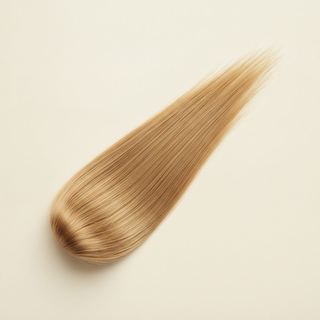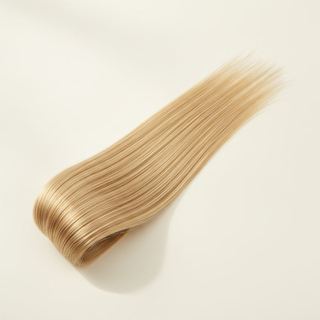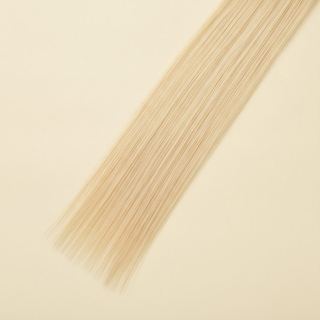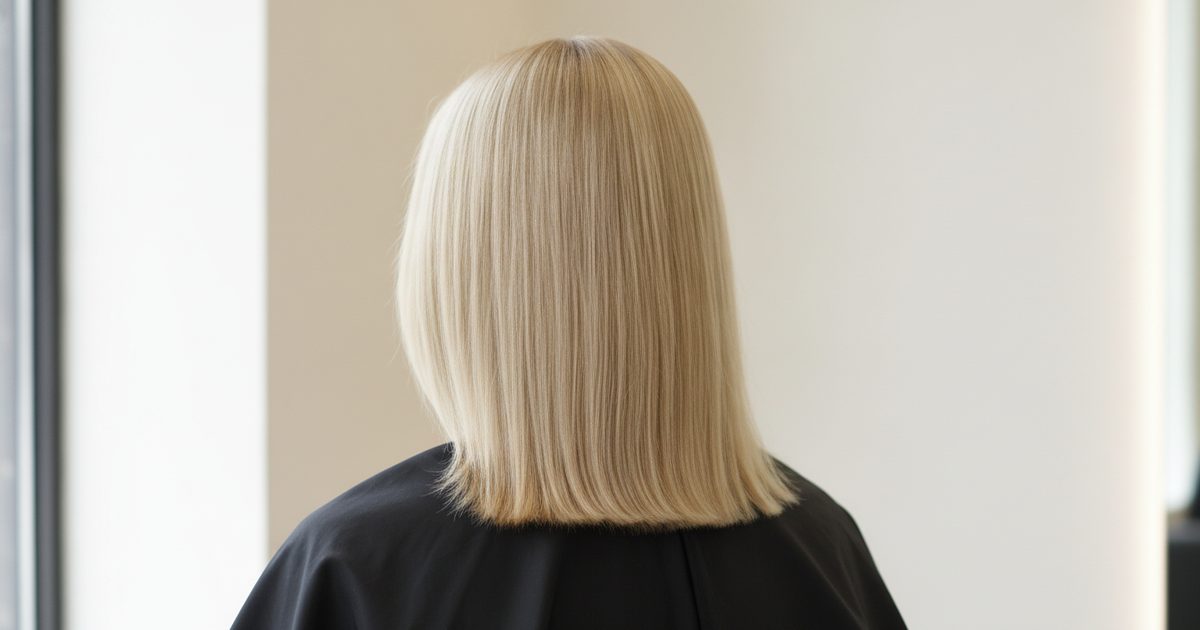
Level 9 is the blonde most reference photos are of: pale, cool once it is toned, with a little warmth still in it. A natural adult 9 is rare enough that nearly every 9 in a chair was lifted there, and the lifting is the subject of this page, because 9 is where the questions stop being about tone and start being about how the hair got through the bleach.
Pale yellow, and why violet is enough
The underlying pigment at 9 is pale yellow, the last of the warmth that was red at 3 and orange at 6. Lifting into 9 from an 8 takes the hair from clear yellow to pale, and under the bleach it looks whiter than that, because the paste carries pigment of its own and the rinse always shows more yellow than the foil did. Lifting through 9 toward level 10 leaves the palest yellow, a few more minutes the hair may not have in it.
Violet sits across the wheel from yellow, and at 9 there is no orange left to need blue, so a violet demi tones it alone, on 10 vol or the 5 to 9 vol toning developer most lines sell. A shade with blue in it is usually too much here. Over-toned, a 9 goes lilac at the ends first, then a flat gray-mauve, and a blue-based ash drifts green-gray. The toner goes on at 9 or darker, since a toner cannot lift, and the T18 people reach for at this level is a level-10 product that does little on a 9. Purple shampoo once a week afterward maintains the violet, and that is all it does. The toner selector lands on violet here and the level chart has the rest of the sequence.
9.21 pearl, 9.1 ash, 9.3 gold
The codes at 9, with the US letters beside them:
| Shade | Reads as | Reach for it when |
|---|---|---|
| 9N, or 9NB in the demi lines that use those letters | Soft pale blonde, natural warmth kept | Gray blending; clients who find toned blondes cold |
| 9.1 (9A) ash | Cool matte beige; flat gray on hair paler than you thought | A hint of gold left |
| 9.2 (9V) violet | Clean neutral blonde, the yellow gone | The default on a clean 9 |
| 9.21 (9P) pearl | Violet with a touch of ash: champagne with a shine | Most “just blonde” requests |
| 9.3 (9G) gold | Honey, warm on purpose | A 10 coming down, or a 9 keeping its warmth |
9.1 is the over-used shade at this level. It was built to cool an 8 with gold still in it, and on a clean 9 it takes the life out, because cool pigment does not reflect light and gold is where the shine lives. Some colorists mix half neutralizer and half neutral on purpose to leave a little warmth in.
The ends take toner in four minutes
Hair lifted to 9 has had its cuticle opened three or four times, the ends most, so a toner written for fifteen minutes is fully in the ends after four and keeps going while the barely lifted roots take the full time. Hence the home-toned 9 with lilac ends and yellow roots. Roots and mid-lengths first, ends last, and the ends’ portion cut one to one with clear so they cannot grab. Four minutes is the number for hair lifted twice or more, and a natural 9 takes the full time. Nothing at the consultation says which you have, so the first end goes in as a test piece and is rinsed early.
Rounds, visits and the pull test
This is the part of 9 that the level number does not describe. From a 7 it is two levels of lift, one round of 20 vol permanent. From a 6 it is three, 30 vol permanent or a high-lift on 40 vol on virgin hair, and if it stalls at 8 you tone and finish next time. From a 5 or a 4 it is bleach, and bleach at these distances is done in rounds. On the scalp 20 vol at most. A bond builder in the bowl. Mids and ends first, roots last because the scalp is warm, a cap or a bag over it to hold that warmth and no dryer. Bleach does most of its work in the first half hour, so a round is 30 to 45 minutes, and then the hair is rinsed, dried and looked at, and the parts that lagged get a fresh mix. A spent bowl left on for an hour lifts nothing more and keeps taking protein.
Between rounds, pull it. A wet strand from the back that stretches and comes back can take another round. One that pulls long and stays there has had its lift for the day, and putting fresh bleach on it is the mistake, whatever the level reads. That is where colorists divide. Some take a natural 5 to a clean 9 in one long day, three rounds and a toner. Others stop after one or two rounds, tone whatever level the hair reached, and bring the lengths up three weeks later, after a cut has taken the ends that failed the pull test. The hair decides which of them was right.
| Start | What it takes | How it usually splits | Rest between visits |
|---|---|---|---|
| 7 (2 levels) | 20 vol permanent (30 vol on coarse, resistant hair) to a pale yellow 9; tone the same visit | One visit | none |
| 6 (3 levels) | 30 vol permanent, or high-lift with 40 vol on virgin hair | One visit; if it stalls at 8, tone and finish next time | 2 weeks |
| 5 (4 levels) | Bleach, or high-lift with 40 vol on virgin hair to an 8 first | Two or three rounds in a day, or two visits | 3 weeks |
| 4 (5 levels) | Bleach only | Three rounds in a day on a strong head, more often two or three visits | 3 weeks each |
Previous color takes high-lift off the table and adds a round. Each retouch afterward is regrowth only, and fresh bleach never overlaps onto hair that was lifted before, because that overlap is where 9s break. Coming down from a 10 is a deposit, one level darker on a demi, with 9.3 to put back the warmth. Most lifted 9s also leave with a shadow root, a 6N or 7N demi an inch down and blurred into the 9V, which softens the regrowth and buys a longer gap between visits. Level 8 is where most hair on this table spends a round.
Gray at level 9
A 9N barely covers. On white hair it goes translucent, and 9N at 20 vol over fifty percent gray reads as a pale blonde with the white showing as lighter strands. Stay in the N series and call it a blend, or drop to 8N and accept an 8. The gray coverage calculator gives the natural-series share for your percentage, and on a head this pale the white hides in plain sight, which is the argument for the blend.