Full color formula

Full color formula: level 6 to 8

Two shades, one developer, and the order that keeps a natural level 6 from rinsing with a hot root on its way to a light blonde.

Published 2026-09-16, updated 2026-09-23. Written by the Easy Hair Edit team and checked against the rules the rest of the site follows.

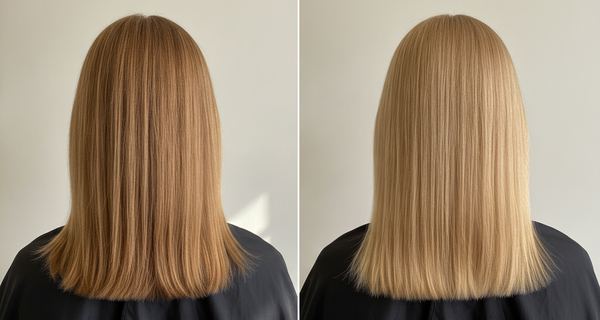
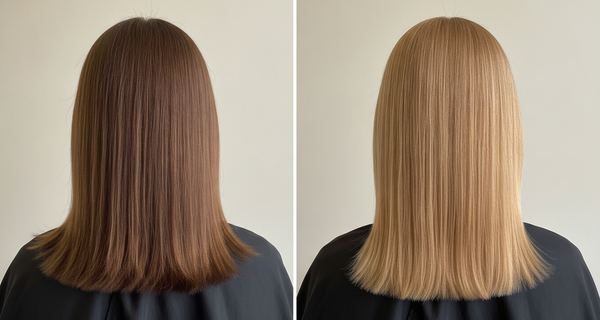
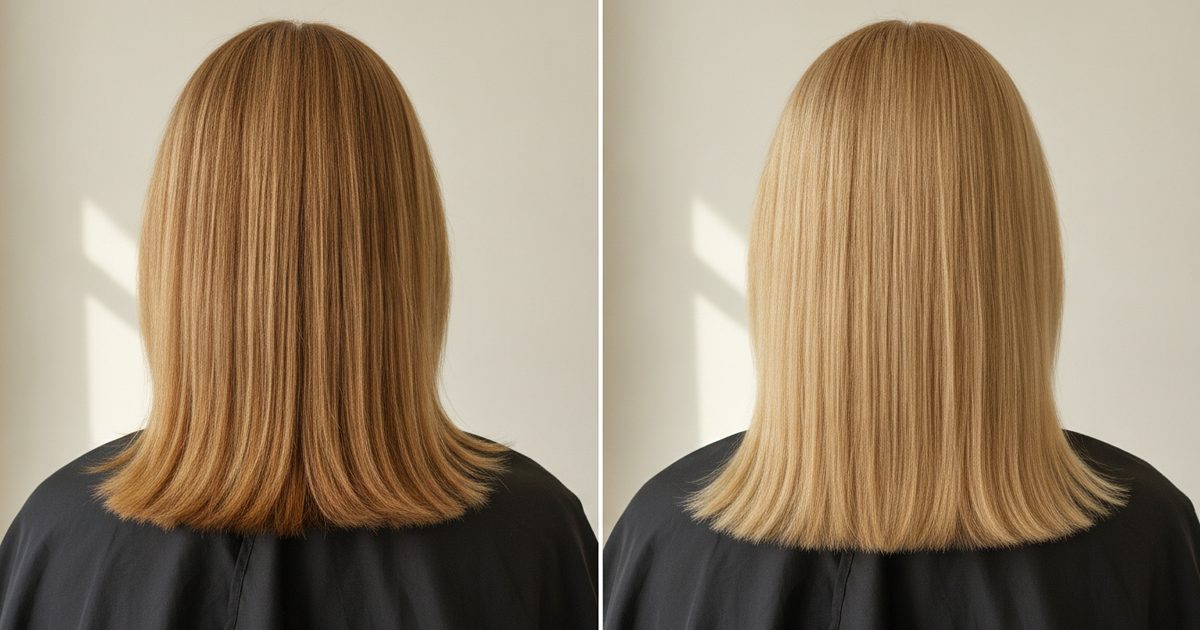
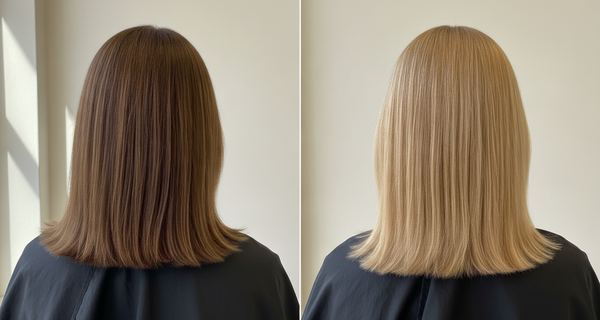
Before and after: dark blonde hair at level 6, then colored to level 8, light blonde
Left: dark blonde hair at level 6, before. Right: light blonde at level 8, cool with 8.1 or sandy with 8.13, with a faint gold a toner can settle, after permanent cream on 20 vol, 40 minutes on one timer from the last section. Illustration, not a photograph.
The formula
In the chair: 55 to 70 min Medium Lasts Permanent; regrowth shows at 4 to 6 weeks, the ash softens by week 6
Product
Permanent cream, 8.1 (ash) for cool or 8.13 (beige) for sand
Developer
20 vol (6%); 30 vol (9%) on coarse or resistant hair
Ratio
1:1
Amount
60 g color + 60 g developer (about 2 oz each) for shoulder-length hair; 90 g and 90 g past the shoulder blades
Processing
40 minutes on one timer from the last section; roots go on at 15; nape scraped from 25
Result
Light blonde at level 8, cool with 8.1 or sandy with 8.13, with a faint gold a toner can settle

Steps

  1. Dry, unwashed hair (the day's scalp oil is a comfort under 20 vol). Part it in four and hold a mid-length piece and a nape piece on white paper at the window: an even, natural dark blonde with no old color on the ends. Old dye on the ends goes to a remover or bleach before this.
  2. Patch test 48 hours ahead. Weigh 60 g of 8.1 or 8.13 into a plastic bowl with 60 g of 20 vol, or 30 vol if the hair is coarse and has always taken color slowly. Mix until it is smooth and one color, and use it now.
  3. Apply to the mid-lengths and ends in quarter-inch sections from the nape up, saturated, kept half an inch off the scalp. Set one timer when the last mid-length section is on and cap it.
  4. At minute 15 on the timer, fill the root inch. Scalp heat makes it lift fastest, so it gets the shortest time on the head.
  5. From minute 25, lift the cap and scrape a nape strand every 5 to 10 minutes, since the nape went on first. Clear yellow is on track. Yellow-orange at the crown at 30 means ten more minutes.
  6. At 40, add warm water and work the color to a lather for a minute, rinse until it runs clear, shampoo once, condition. Dry a section before you judge it.
From the chair
  • On hair past the shoulder blades mix 90 g and 90 g. Running out at the crown at minute 12 is how a two-tone head starts, and a second bowl mixed later is weaker than the first.
  • Cap it and keep the room warm. A cold salon slows 20 vol enough that 40 minutes does the work of 30, and the cap holds the scalp's own heat, which is the only heat this needs.
  • If the root inch goes on at minute 0 with the rest, you will see a hot root at the rinse. The roots get filled when the timer reads 15.
The quick version

Permanent 8.1 (ash, an 8A type) or 8.13 (beige) with 20 vol at 1:1 for 40 minutes, mid-lengths and ends first, roots at minute 15, under a cap. Two levels of lift on natural hair exposes yellow with a trace of orange, and the blue in the ash or the ash-gold of the beige covers it as it appears. Coarse, resistant hair takes 30 vol on the same clock.

Two shades do this job and the face decides between them. 8.1 is blue over the last of the orange and lands on a cool light blonde. 8.13 is ash and gold together and lands on sand, and on someone who has been warm all her life the sand is the one to put on first. Both go on 20 vol, which lifts two levels on virgin hair in 40 minutes, and 6 to 8 is the cleanest version of what permanent color does well: natural dark blonde to light blonde, one bowl, no bleach.

What a 6 lifts through

A 6 is orange underneath. It lifts through yellow-orange to the clear yellow of an 8, the same red-orange-yellow ladder every lift climbs, and the shade has to cover that yellow as it appears. 8N has nothing in it for the job and comes out gold. 8.1 carries blue, an 8A on US lines. 8.13 carries ash and gold. Either is a cool shade against warmth, which is the rule when tint does the lifting, however chocolatey the warm swatches look.

ShadeOn the yellowReadsGray
8.1 (ash, 8A)Blue cancels the orange trace and cools the yellowCool light blondeSheer on white. Add a third 8N
8.13 (beige)Ash and gold together, softens rather than cancelsSand, warm-neutralSame
8.2 (violet)Violet on the yellow only, nothing for the orange traceCool, with the nape keeping its warmthSame
8N (natural)Nothing across the wheelGold blondeThe only one that covers, and poorly at 8

The bowl

Sixty grams to 60 g of developer, about 2 oz each, or whatever the tube gives as the ratio. Weighed in a plastic bowl. The tube stays on the cart with the directions facing up, because no two lines agree on the minutes. A second bowl mixed 20 minutes later is weaker than the first, so 90 g and 90 g goes in the first bowl on long hair. Saturation is the whole application: thin, consistent quarter-inch sections and enough product on every one, since thick sections lift unevenly and an under-saturated crown comes out a 7. The dye amount calculator scales it and the developer mix calculator does the grams.

Mids first, roots at 15, cap on

Mid-lengths and ends first, in sections no thicker than a quarter inch, nape upward, kept half an inch clear of the scalp. The scalp is hot and pushes the root inch a level further in the same time, so the roots go on last. One timer starts when the last mid-length section is on (two pairs of hands get it on twice as fast, and the videos borrow a friend for the back). A cap goes over it, the roots get filled when the timer reads 15, then the cap goes back. No dryer and no heat pad. The cap is holding the head’s own warmth.

Looking, from 25

The nape went on first, so it is the strand to scrape from minute 25, every 5 to 10 minutes, with a look at the crown beside it. Clear yellow at the nape with the crown close behind is on track. Yellow-orange at the crown at 30 means ten more minutes and another look at 40. A crown paler than the nape means the roots went on too early. Judge the scraped strand dry. Wet hair reads a level darker at the sink, and the ash in the tint sits on top of the level while it is wet, so a strand that looks like a 7 under the tap is often the 8 you wanted once it is dried on a paper towel. How much gold a given 6 holds onto, no swatch shows me before that scrape does.

The clock does not stretch Fifty minutes on 20 vol lifts nothing after 45 and lets the root keep going. The number on the tube is the maximum. Yellow-orange at 40 means the hair was a 5 or the lengths carried old color, and a fresh bowl in a week does what 15 more minutes now will not.

The rinse and the toner

At 40, or 45 at most on coarse hair, add warm water and work the color to a lather, rinse clear. One shampoo, condition, rough-dry a section and look at it in daylight. Most 6-to-8 heads read a light blonde with a faint gold the 8.1 or 8.13 softened without removing. The level 8 to 8 demi toner on 10 vol, on towel-dried hair for ten minutes, settles it the same day, and the toner selector sorts ash from beige for it. Between visits a purple shampoo once a week holds the tone. It maintains, and it will not fix a gold that a toner should have handled.

If it stalled

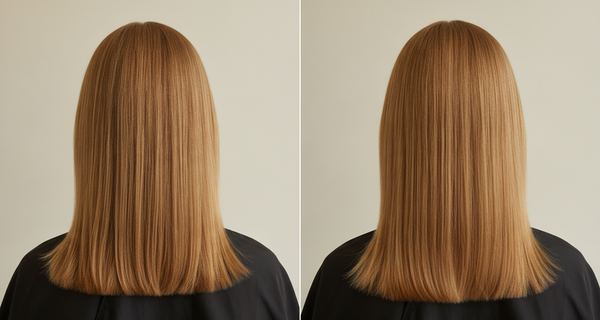
Permanent, so it does not fade out, and regrowth shows at four to six weeks. But if the rinse showed a 7 rather than an 8, the answer is a week’s rest and a fresh bowl on 20 vol, with a strand from the part that stalled tested first, because a fresh mix beats a longer time on every head. The second pass goes on in the same order as the first, mids first and roots last, and the processing time calculator puts fine and coarse hair on their own clocks for it.
Things people ask at the basin

Can I do this on hair that was colored last year?

Only on the regrowth. Tint will not lift tint, so the old dye on the lengths stays roughly where it is while the new growth goes up two levels, and that is a band. Treat the regrowth with this formula and the lengths with a demi at the level they already are, or send the lengths to a remover first.

Why 8.1 and not 8N?

The hair on its way from 6 to 8 passes through yellow-orange and settles on yellow, and an 8N has nothing in it to cover that, so it reads as a gold blonde. The blue in 8.1 sits across from the orange trace and the ash-gold in 8.13 covers it with sand. Ash or a cool shade is the rule whenever tint is doing the lifting.

It came out a 7. What happened?

If the whole head is a 7, the hair was probably a 5 that looked like a 6 wet, or the developer was old. If the ends are an 8 and the crown a 7, the crown was under-processed, usually because the sections were too thick or the mix ran thin there. A fresh bowl on 20 vol after a week is the fix either way, and a longer time on the day would not have been.

How much gray does this cover?

Some. An 8.1 on its own is a sheer shade and white hair shows through it as a paler, cooler streak. Up to about 30 percent gray, mix a third of 8N into the bowl; past that the gray coverage calculator gives the ratio, and 8 covers gray poorly at any ratio.