Two levels in one bowl
Take each shade's level, multiply by its grams, add the two and divide by the total: 40 g of a level 7 with 20 g of a level 5 is (7 × 40 + 5 × 20) ÷ 60 = 6.33 on paper. The 5 is a third of the bowl and two levels down, so the calculator expects about 6.0 on the head. Ounces give the same answer, since it is the proportion that counts, so an ounce of 7 with half an ounce of 5 lands in the same place. Equal parts of two neighbors is the everyday version, 8.0 and 7.0 one to one for a seven and a half.
Tone is a direction on the color wheel, and directions do not average. They add up, soften each other or cancel, depending on how far apart they sit, so what you get for tone is a description: soft gold, sandy beige, flat brown.
How tones behave together
Each tone digit points somewhere on the wheel. Natural points nowhere. Gold sits at yellow, copper at orange, red at red, mahogany at red-violet, violet at violet, ash at blue, and it reads more blue-green on level 4 and darker. Beige (.13) is ash over gold, a warm neutral; pearl (.21) is the other way round, violet over ash, and it reads cool. The digits here follow the international system most European lines use; some lines give the same digit another meaning, and many US lines use letters, so check what your line's number means before you mix.
Two tones on the same side of the wheel keep their direction and the grams set how strongly it shows. Neighbors add up to something between them, gold and copper into a golden copper. Tones across the wheel cancel, and the nearer they are to true opposites, the more neutral you get. The calculator holds all 28 pairs; the table below is the ones people ask about, at equal parts, on hair at or near the shade's own level.
| Pair | What you get | Worth mixing? |
|---|---|---|
| .0 + any tone | A softer version of that tone | Yes, the safest mix |
| Ash .1 + Gold .3 | Beige | Yes, home-made .13 |
| Violet .2 + Gold .3 | They cancel: neutral brown to 5.5, neutral to 7.5, neutral beige above | Yes, to kill yellow |
| Ash .1 + Violet .2 | Cool violet-ash | Yes, on light hair |
| Gold .3 + Copper .4 | Golden copper | Yes |
| Copper .4 + Red .6 | Copper red | Yes |
| Violet .2 + Red .6 | Mahogany, the blue-based reds | Yes |
| Ash .1 + Copper .4 | They cancel: neutral brown to 5.5, neutral to 7.5, neutral beige above | No, buy the brown |
| Ash .1 + Red .6 | Muted red | Rarely |
| Violet .2 + Copper .4 | Rose | Rarely |
| Beige .13 + anything | The partner's direction, softened | Yes |
| Pearl .21 + anything | The partner's direction, cooled | Yes |
Ash .1 with violet .2 is the pair the level decides. On light hair it reads as pearl; on level 7 it looks smoky, and on 6 and darker muddy.
Two parts ash to one part gold, 40 g and 20 g, is the version the calculator calls beige leaning ash, and the same pair at equal parts is the plain beige in the table. The proportion between the two shades does the work, which is why it gets weighed. A beige made by eye in March and by eye again in May is two different beiges, and the second visit will not match the first.
Where the average lies
The level sum treats every gram as carrying the same amount of dye. It does not. A level 4 tube holds far more pigment than a level 9, because it has to deposit a darker result, so mix a 4 with an 8 and the 4 wins by more than the grams say: the calculator takes half a level off at a two-level gap and a full level from three levels up, scaled by how much of the bowl the darker shade is. 5.0 and 8.0 at equal parts comes out about 5.5 against the 6.5 on paper, with the 8 doing little beyond thinning the 5.
Purpose is the other problem. A level 8 permanent is built to lift to 8 and deposit an 8 tone. Half and half with a 4 it has neither the pigment nor the developer share to do either, so what comes out is a 4 or 5 with a sheerer finish, and past a two-level gap you are looking at the darker shade with a lighter shine on it. How heavily a line loads its dark shades is printed nowhere. Some 5s mix like a 4.5, so take a test strand from the back, process it with the head's timing and blow it dry before the whole head gets the bowl.
Developer follows the color total: 60 g of mixed color at 1:1 takes 60 g of developer, and the volume still decides the lift, as the hair level finder lays out. Two shades from one line share a ratio and a base. Two from different lines may not, and then the ratio is wrong for one of them whatever you do.
In the bowl
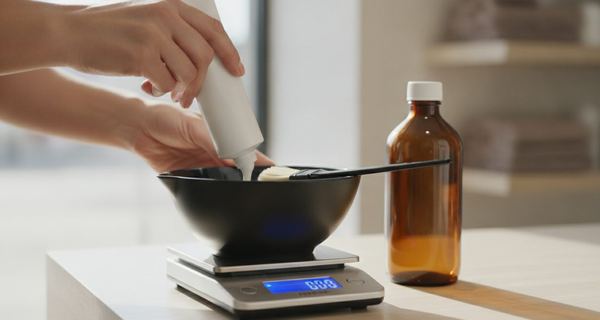
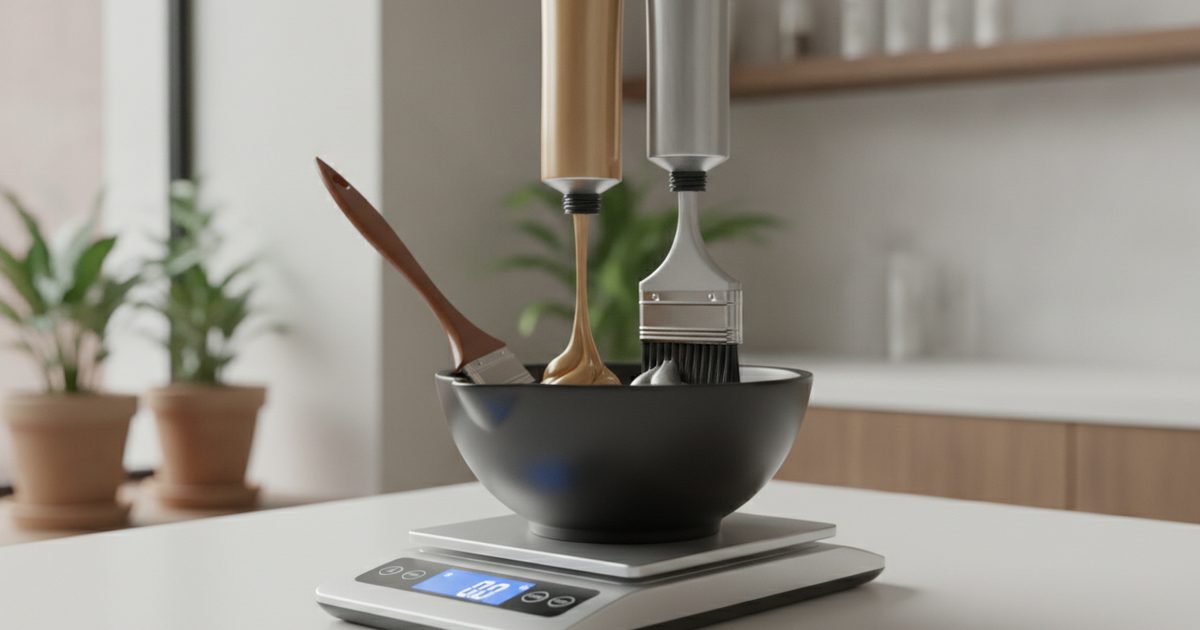
Gloves on, then a plastic or glass bowl, never metal, which reacts with the mix and can leave spotty results. Bowl on the scale, zero it, first shade in to its number, zero again, second shade to its number, zero again, then the developer. Zeroing between each addition means no subtraction while a client watches you in the mirror. Mix with the brush or a whisk until nothing streaky is left at the bottom of the bowl. Two shades that are not fully blended go on as two shades, and you will see the streaks once the hair is dry.
When to mix and when to buy the shade
A custom mix earns the second tube when you want an intensity the tube does not offer, an in-between level with the shades within two levels of each other, a pair that reinforces itself like copper and red, or a beige made on purpose. Some colorists stretch a shade with clear for the in-between level: half an ounce of clear with half an ounce of 5.0 reads as a 6 with the same tone.
Buy the shade when:
- the tones cancel. A mixed brown is a flatter brown than the one in the tube, and it took two tubes to make;
- the level gap is three or more;
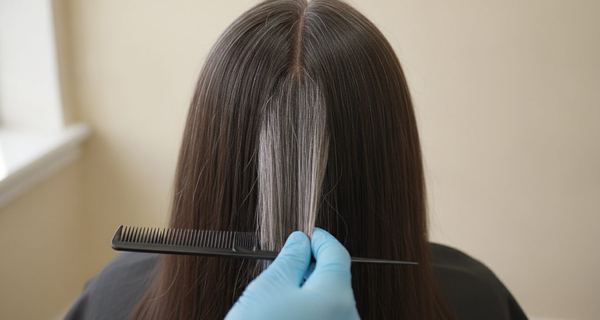
- the job is gray coverage. The natural series is built for it and the gray coverage calculator gives the share of N a formula needs;
- the batch is bigger than one bowl. The developer mix calculator turns any color total into developer grams or ounces at your ratio.
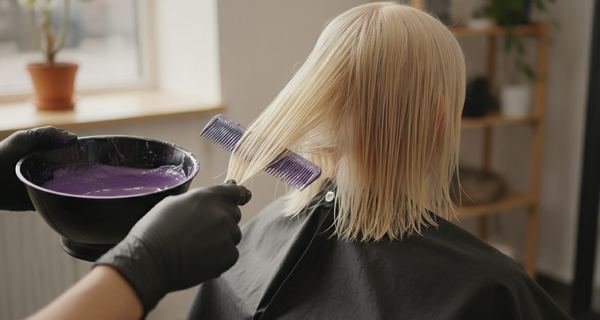
Whichever way you go, it goes on in four quadrants and in partings thin enough to read through, so that a normal amount of product reaches every hair, and the bowl gets used while it is fresh, since a blend that has sat twenty minutes has been working in the bowl the whole time.