Keep it off the scalp, keep it away from a dryer, and if you are coloring at home, put it back on the shelf. Forty volume is 12 percent hydrogen peroxide. Most colorists say the same two things about it, that they would not use it at home at all and that they use it very rarely in the salon, and the reason is the way it works. It lifts very fast and then it fizzles out just as fast, so the whole reaction happens in the first stretch of the clock, hot, on skin as well as hair, and little time in which you can still stop it. What it buys, three to four levels with a high-lift series, it buys on healthy uncolored hair only. Everywhere else it costs more than it gives.
There is a 50, and nobody needs it
Forty is not the top of the shelf. Beauty supplies in the US sell a 50 volume, 15 percent, usually behind glass or with a child lock on the cap, and every colorist asked about it says some version of the same thing: it exists, and we are not making bombs. Worth knowing that the cosmetics rules Europe and the UK run on cap hair products at 12 percent peroxide, written into the law as 40 volumes, so a 50 sits above the line those markets drew. One test of it against 40 got the same level at the brand’s 50 minutes, and the damage came from heat where the hair was piled up under the mix, which tells you what the extra 3 percent does. More heat, no more lift. Forty is the strongest most colorists will touch, and the small bottle is the one to buy if you buy it at all, because peroxide weakens once opened and the bookings for it are that rare.
Fast, then it fizzles
Volume is how much oxygen the peroxide can release, so a 40 releases twice what a 20 does, and it releases it early. The alkali in the tube opens the cuticle, the peroxide oxidizes the melanin inside, and at 12 percent the cuticle is thrown open where 20 eases it. Protein goes out with the pigment. The hair that comes out is more porous than the level it reached: toner takes in three minutes on the ends and washes out in a week, and a wet strand that stretches and stays stretched has lost what no developer gives back. Colorists reach for the plain words here, spaghetti hair, gummy, fried, because that is what a 40 vol pass on fine hair looks like.
With lightener the same is true and the payoff is smaller. The tub says up to seven or nine levels, and that number belongs to the powder. The developer only sets how fast it gets there, so 20, 30 and 40 under the same powder arrive at the same pale yellow. Forty arrives first, hottest, and with the least time to catch it.
High-lift: 30 or 40, per the tube
High-lift blonde on virgin hair is what 40 exists for. The high-lift series carry more alkali and less pigment, they are mixed at 1:2, one part color to two parts developer (the developer mix calculator does 1:2 in grams or ounces), and they lift and tone in the same pass, which a lightener does not. Most tubes allow 30 or 40. Thirty gets three levels with less heat, and 40 is what the full four levels need, a natural 5 or 6 to a 9, warm, with yellow-orange under the ash in the tube. The level chart and the level 6 page show what a lifted 6 looks like at minute 25. A regular permanent tube on 40 does not lift more than it does on 30 vol. The tube caps the result, and the extra strength adds heat and porosity.
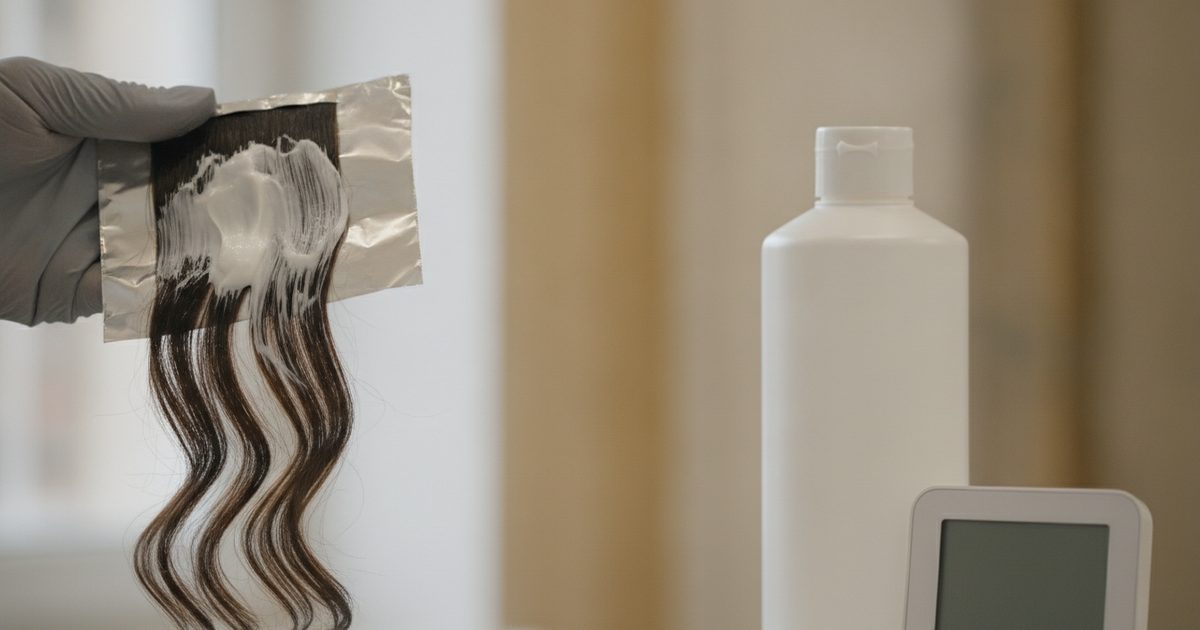
Virgin means virgin. A high-lift over hair with old tint on the lengths gives lifted roots and untouched, warmer lengths, a two-tone band that only lightener fixes, and a demi from last winter that has faded to almost nothing still counts. Ask twice, and check the lengths before mixing. I strand test every high-lift, a pinch from the nape in foil for the full time, and I book the toner for the same visit, because a high-lift lands gold whatever the tube promises.
Lightener and 40
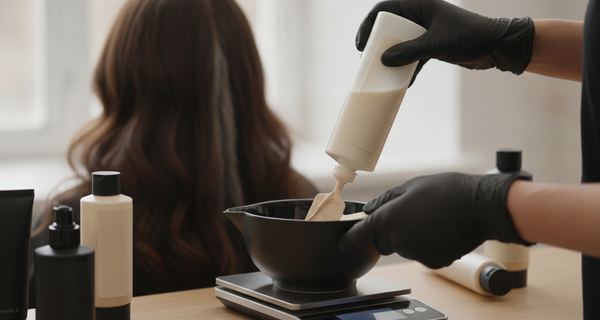
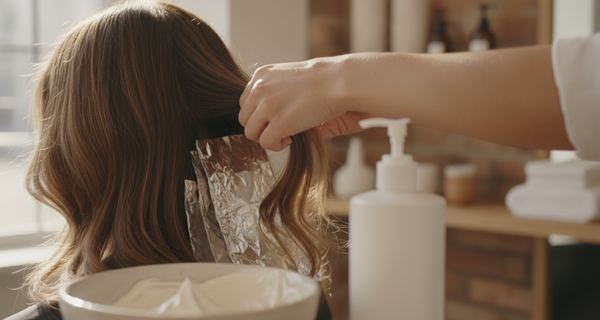
On the scalp, never. Body heat adds to the fastest developer in the room, the mix sits on skin as well as hair, and the burn arrives in the time the hair takes to reach orange. Every salon has a story about it. On-scalp lightener is 20 vol in nearly every chair, 30 goes in foils, and on coarse, healthy, virgin hair some brands allow 40 in foil. Read the back. Gloves on, plastic bowl, the tub’s ratio measured with the same scoop for both parts, the strand saturated inside the foil, a check every ten minutes with the processing time calculator as the starting figure, and the first foil that goes pale yellow comes out. No dryer and no hood. Added heat takes a fast reaction and removes the part where you can still stop it.
Slower routes to the same blonde
The same blonde nearly always has a slower way in, and the slower way arrives cleaner.
Two rounds of lightener, 20 on the scalp and 30 in foils, a few days to three weeks apart and toned each time, gets a natural 6 to a 9 or 10 and a 5 to a 9, with the hair in better shape than one 40 vol pass, because each round stops at a level the hair can carry. Low and slow, as most colorists now put it, costs a second visit. One or two well-known colorists argue the other way, that a lower volume for longer gives the same result and the extra time in an alkaline mix is its own damage, so you will hear both sides. Nobody on either side argues for 40 on the scalp.
A high-lift on a healthy virgin 5 or 6, strand tested, on 30 or 40 as the tube says, is the other route, and it is the one 40 vol exists for.
| Goal | 40 vol route | Slower route | Difference in result |
|---|---|---|---|
| Natural 6 to a 9 or 10, virgin hair | High-lift on 40, strand tested | Lightener in one or two rounds, 20 on the scalp, 30 in foils, toned | High-lift lands gold and stops at 9, lightener lands cleaner, a visit later |
| Natural 4 to blonde | 40 vol lightener on the scalp | 20 vol lightener on the scalp, two or three rounds | 40 burns and stalls orange, the slow route gets there |
| Resistant gray, 6N | 40 to force it | 20 vol, N shade, full time, plenty of product | 40 lifts the pigmented hair and leaves the white sheer, 20 covers |
| Lightening previously colored hair | High-lift on 40 | Lightener, or a remover then color | Old tint does not move on any developer, 40 gives heat and a two-tone band |
| Foils on coarse, healthy hair | 40 vol lightener in foil, brand permitting | 30 vol lightener in foil, ten more minutes | Same level, fewer broken hairs at the fold |
Mixed 40 is used the minute it is mixed. Lightener swells in the bowl as soon as air hits it, the leftovers are dead by morning, and an opened bottle loses strength on the shelf, which is one more reason the liter of 40 in the beauty supply belongs to nobody.