Most of what people ask about level 1 is how to leave it, so this page runs in the order a consultation does: what is on the head now, what the lightener shows on the way out, how many rounds it takes, and getting to black last, because that part is deposit. The level chart lists level 1 as the one level with no neutralizer, which holds until the lightener goes on.
Two blacks at the window
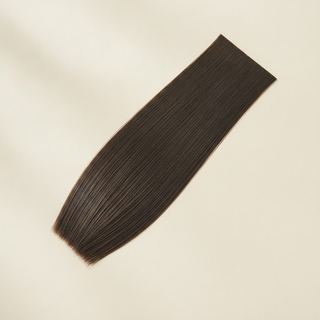
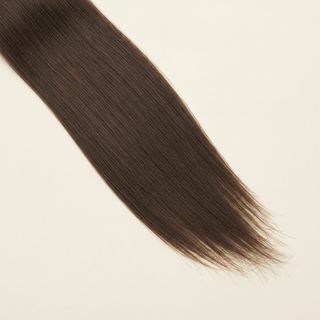
Natural level 1 in daylight is black at the root with a faint brown-red on the ends where the sun has been. Hold a true 1 next to a 2 at the window and the 2 shows a warm cast the 1 does not have. Indoors they look the same. Most of the “black” in a European salon turns out to be a 2 or a dark 3 once it is dry and at the window, and a natural 1 is the ordinary color across much of Asia and Africa.
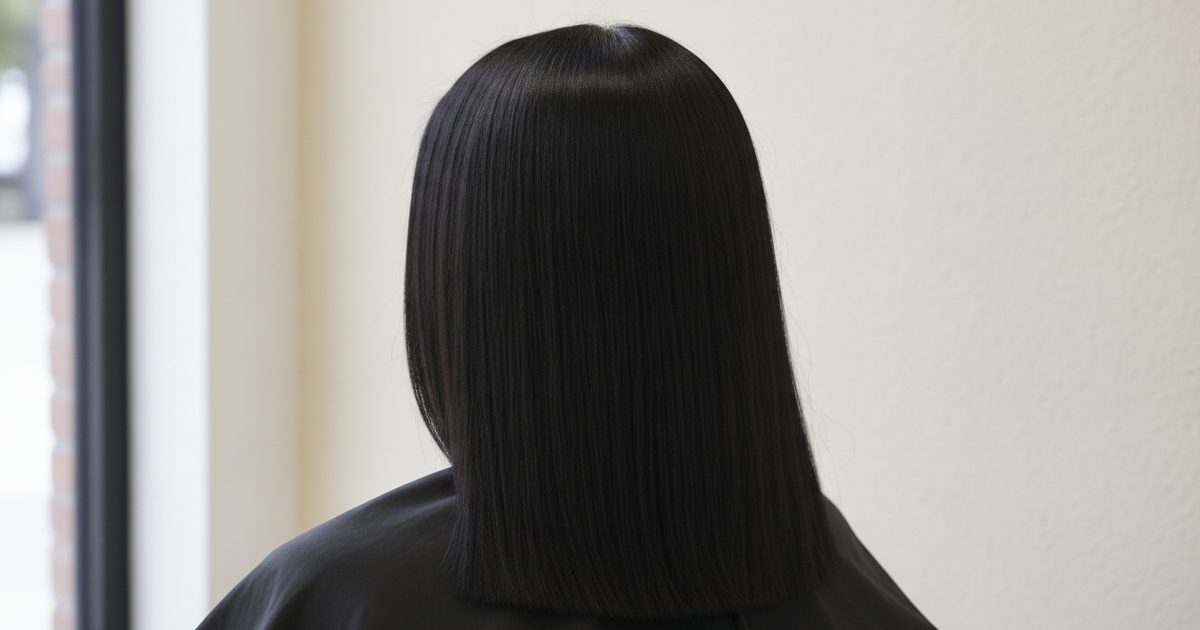
Colored level 1 reads flatter and cooler than a natural 1: the blackest thing in the room when fresh, and six weeks in a black with a brown-red halo at the ends and a stripe of regrowth.
What lives under black
Level 1 sits on dark red-black, and the pigment never shows at level 1 because the eumelanin on top is too dense. Lift into level 2 and the first warmth appears as a burgundy cast in daylight. Lift through 2 into 3 and 4 and it opens up to red and then red-orange, which is what people mean by black hair going red under bleach. From there the order is the same on every dark head, red, then orange, then yellow, then pale yellow, and the orange stage lasts longest.
Nothing at level 1 needs neutralizing. The question arrives once you have lifted into 3 or 4, where a green-based ash cancels the red. Too much green there turns the hair a muddy green-brown in daylight, and a violet-based shade does nothing because there is no yellow yet to cancel.
Black covers gray and shows regrowth in ten days
Level 1 covers gray completely: a 1N or 1.0 permanent on 20 vol covers 100 percent white and reads as solid black on it, with no translucency. Ten vol only blends white hair. The cost is contrast: white regrowth against black shows at about ten days, so a client with 50 percent gray is back every three weeks or living with a stripe, and that is the part to say before anyone commits. The gray coverage calculator does the mixing ratio.
1B is a different black from 1N
1N and 1.0 are natural black, a balanced base with a little warmth left in, which fades toward a soft brown-black. 1B is blue-black, the same depth with a blue tone loaded on top, which reads colder and glossier.
The trouble with 1B is porous hair. Blue is the smallest color molecule and the first to wash out, which hardly matters on virgin hair. On ends that have been bleached or heat-damaged the blue washes out unevenly, the black under it fades at the same time, and after a month the ends sit at a level 3 or 4 with the last of the blue on them, which reads as a cool teal. A client once brought me a photo of “green ends” on a 1B she had put over old highlights at home, teal from the ears down. On anyone past forty a 1B tends to read like a wig at the hairline, and 1N does the same job with a kinder grow-out.
Leaving black: rounds, visits and what goes in the bowl
Permanent color moves a natural 1 a level or two and stops, a high-lift on 40 vol reaches a 5 on virgin hair, and everything past that is lightener. The filmed salon jobs count the lift in rounds, not weeks: a fresh mix on dry, unwashed hair, mids and ends first because the scalp is hot and the roots run ahead, thirty minutes with a wipe every ten, rinse, and a fresh bowl on whatever is lagging. A round does most of its work in the first half hour, and nothing past an hour does anything but damage. On the scalp the developer is 20 vol at most; 30 belongs in foils or on the lengths, and 40 stays off the skin. A bond builder goes in every bowl, or the lightener has one built in, a cap or bag keeps the mix moist and holds the scalp’s warmth, and no outside heat goes near it.
Between rounds you pull a wet strand; if it stretches and stays stretched, that hair is done for the day whatever level it reached, and a cut beats a third round. Some salons book a test round first, one section through the full time, and what it reaches sets the plan.
How many rounds is where colorists split. In the chair, a natural 1 to 3 reaches a 9 in one long day in two or three rounds, and the ends often stop a level short of the root. The cautious educators say two or three visits, weeks apart, and at home that is the route to take. Both sides agree the scalp and the ends set the limit and the calendar does not. Whatever the last round leaves, the toner goes on at that level or darker, since a toner cannot lift, on 10 vol or the 5 to 9 vol processing solution sold for it. On a 9 with a 1 growing back, a shadow root, a darker demi smudged into the first inch, hides the line and buys weeks between visits.
| From level 1 to | Levels of lift | Pigment exposed | What it takes | Rounds on natural 1 |
|---|---|---|---|---|
| 3, dark brown | 2 | red | 20 vol permanent; 30 vol if coarse | one application |
| 5, light brown | 4 | orange-red | high-lift on 40 vol, virgin hair only; otherwise lightener | one, sometimes two |
| 7, medium blonde | 6 | yellow-orange | lightener, 20 vol on the scalp | two |
| 9, very light blonde | 8 | pale yellow | lightener, then a violet toner | two or three, in one day or across visits |
Box black
Old box black is a separate job, and a longer one. Permanent color moves natural pigment and leaves the dye alone, so a lighter permanent on 30 vol takes the regrowth to a hot 4 while the lengths stay black, and under lightener the old black hangs on as a stain, so box-dyed lengths lag behind the natural root in every round. Some colorists put a color remover on first, which takes out oxidative dye and nothing else, and read the natural level before deciding. Most filmed corrections go straight in with lightener at 7 to 20 vol and a bond builder, sometimes as a bleach wash with shampoo in the bowl for the first round, because that is where the job ends up anyway. Add a round to every row above for a box-dyed 1. And the lightener leaflet says not to use it on hair treated with henna or metallic dyes, worth asking about before the bowl is mixed.
Getting to black is a deposit job
Going darker to level 1 is deposit. From a 2 or 3, a 1N on 10 vol demi or 20 vol permanent does it in one go. From a 4 or lighter on lightened hair it is 3 or more levels down, the hair is missing the dark red-black a natural 1 carries, and a 1N straight on goes flat or green at the porous ends. Fill first with a warm shade at level 3 or 4, then deposit the 1N on 10 vol, and go easy on the ends, because lightened hair drinks a black and a 1 is the hardest level to take back out. The level 2 page has the same fill logic one step lighter.